Protecting our Common Home
Pope Francis’ recent letter, Laudate Deum, makes it clear that each of us has a personal responsibility to our planet and our own role to play in arresting Earth’s seemingly headlong plunge into disaster. It is each of our responsibility to be stewards of the Earth. It is through a combination of our own individual efforts, added to those of all other individuals, that real change can occur.
The Christian Brothers of Oceania have produced a simple checklist of possibilities to help individuals assess their own daily behaviours in terms of environmental impact. It provides a host of suggestions for making small changes in behaviour and actions which, cumulatively, can make an enormous difference.
Click here to access handy hints for reducing waste.
The Christian Brothers of Oceania have produced a simple checklist of possibilities to help individuals assess their own daily behaviours in terms of environmental impact. It provides a host of suggestions for making small changes in behaviour and actions which, cumulatively, can make an enormous difference.
Click here to access handy hints for reducing waste.
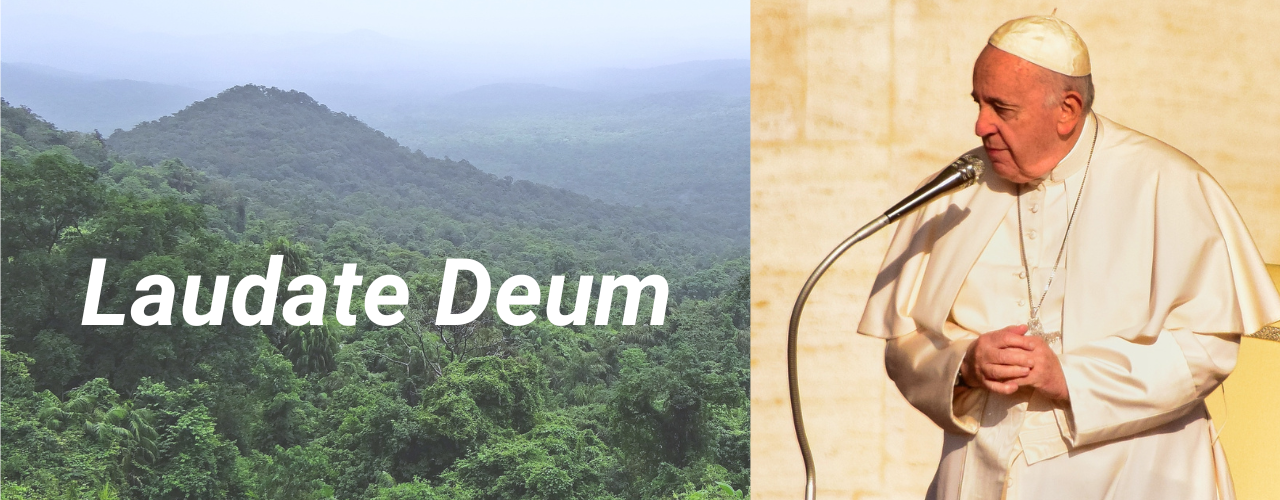
Eight years on from the publication of his major encyclical, "Laudato si': Caring for our Common Home", Pope Francis concludes that "I have realized that our responses have not been adequate, while the world in which we live is collapsing and may be nearing the breaking point... Despite all attempts to deny, conceal, gloss over or relativize the issue, the signs of climate change are here and increasingly evident. No one can ignore the fact that in recent years we have witnessed extreme weather phenomena, frequent periods of unusual heat, drought and other cries of protest on the part of the earth that are only a few palpable expressions of a silent disease that affects everyone.”
These words are from a new and relatively short (8,000 words) letter on the topic, published at the beginning of October this year. Laudate Deum ("Praise God") is an urgent call to believers of every kind to join forces against the climate crisis. It neither repeats nor replaces anything in Laudato Si', but instead addresses new developments in the past eight years.
Click here to read the full letter (it will not take more than 30 minutes or so).
The 500-year old Ignatian Examen is a daily prayer of review, used across many Christian denominations. The purpose is to discern the ways in which God has been present to you, the times when the Holy Spirit was drawing you towards life. A special ‘Ecological Examen’ has been developed as a tool for reflection and action to help deepen our call to care for creation and the most vulnerable.
Click on the image to engage with the ecological examen.
Click on the image to engage with the ecological examen.
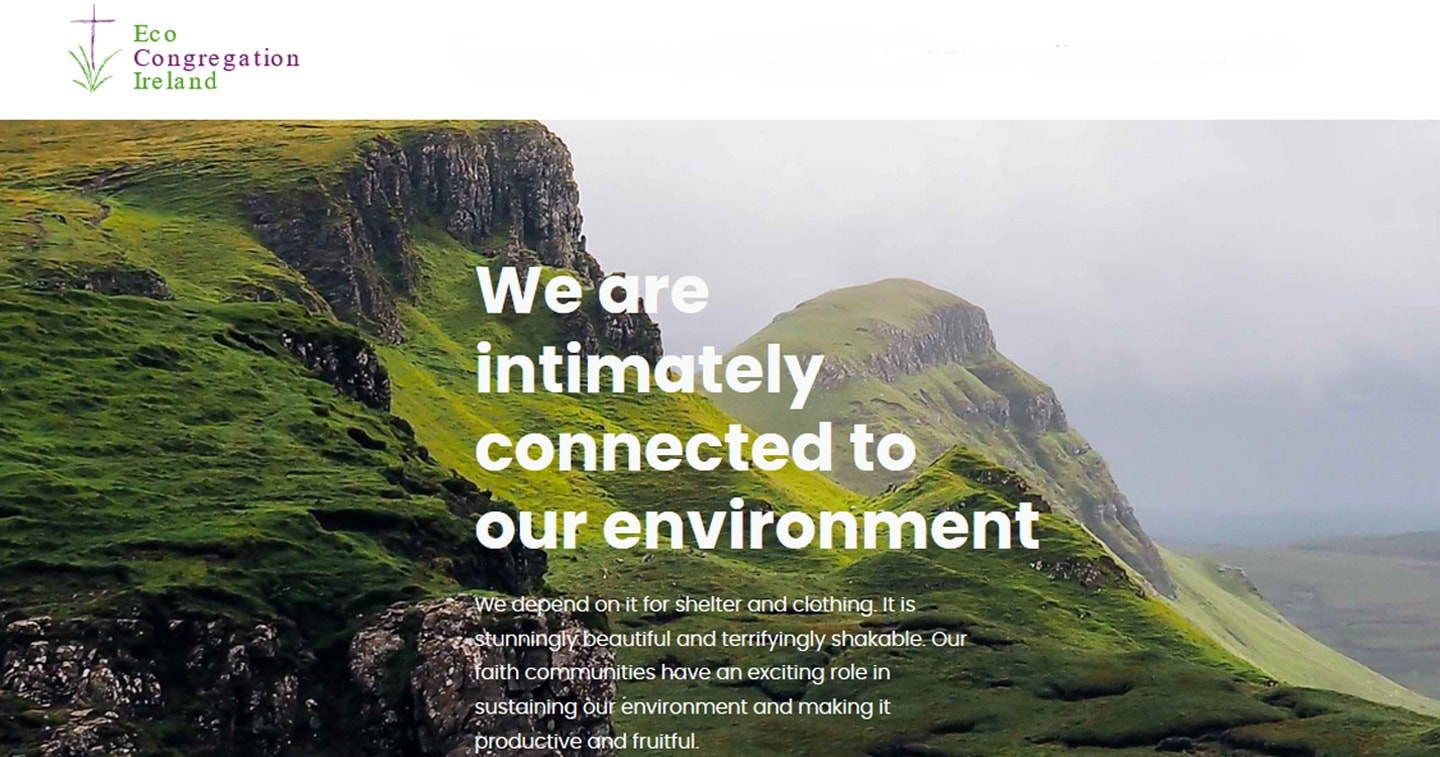
The ecumenical Eco-Congregation Ireland (ECI) movement encourages churches of all denominations to take an eco approach to worship, lifestyle, property and finance management, community outreach and contact with the developing world. It aims to help churches celebrate the gift of God’s creation, recognise the inter-dependence of all creation and care for it in their life and mission and through members’ personal lifestyles. The movement is also active in Scotland, at Eco-Congregation Scotland.
John Feehan is a native of Birr, Ireland and is one of Ireland’s leading geologists, botanists, environmental communicators, authors and broadcasters. After receiving his PhD on the geology of the Slieve Bloom and Devilsbit Mountains in 1980, John went on to become a Senior Lecturer in the School of Agriculture and Food Science at University College Dublin, where he taught for twenty years up to his retirement in 2012.
John’s work is driven by a deep commitment to the maintenance of rural biodiversity and cultural heritage, and the sustaining of rural community. He has written extensively on the natural and cultural heritage of the Irish landscape and on many broader aspects of environmental science. John is particularly well known as an ‘interpreter of the Irish landscape’ – a role he received broadcasting awards for. He actively engages with agriculture and industry to build appreciation and understanding of biodiversity, and to develop conservation and restoration strategies. He is a strong advocate for community supported agriculture and integrated mixed farming as a means of maximising natural capital of land and sustaining rural community. Between 1992 and 2008 John collaborated with Bord na Móna on Ireland’s peatland heritage. He has developed principles for the restoration of the country’s post-extraction peatlands, emphasising their potential for biodiversity and as a rich amenity resource for local communities.
Click on the image to access his inspiring talk given at Knock in August 2022.
John’s work is driven by a deep commitment to the maintenance of rural biodiversity and cultural heritage, and the sustaining of rural community. He has written extensively on the natural and cultural heritage of the Irish landscape and on many broader aspects of environmental science. John is particularly well known as an ‘interpreter of the Irish landscape’ – a role he received broadcasting awards for. He actively engages with agriculture and industry to build appreciation and understanding of biodiversity, and to develop conservation and restoration strategies. He is a strong advocate for community supported agriculture and integrated mixed farming as a means of maximising natural capital of land and sustaining rural community. Between 1992 and 2008 John collaborated with Bord na Móna on Ireland’s peatland heritage. He has developed principles for the restoration of the country’s post-extraction peatlands, emphasising their potential for biodiversity and as a rich amenity resource for local communities.
Click on the image to access his inspiring talk given at Knock in August 2022.
A group of Faithful Companions of Jesus (FCJ) sisters and Companions in Mission from around the world got together to sing Touch the Earth, by Kathy Sherman CSJ. May we continue to love and care for our planet!
This glorious recording of Haydn's Creation by Christopher Hogwood and the Academy of Ancient Music is linked with amazing video footage from the natural world. In music, words and images, it highlights what we stand to lose if we do not take action - even small steps - to help save our planet and nature in all its glory.
Click on the image above to listen. Allow a few seconds for the sound to come on.
Click here to access the libretto.
Click on the image above to listen. Allow a few seconds for the sound to come on.
Click here to access the libretto.
Voices from the peripheries are usually ignored in global summits and environmental decision-making, typically dominated by powerful corporate interests. Rather than the policy decisions of those in power, this 80-minute feature film focuses on how people at the grassroots level can bring about change. In the movie, a diverse group of climate activists, Indigenous people and scientists meet with Pope Francis to dialogue about the environment.
Click on the image to access this compelling film.
Click on the image to access this compelling film.